 Kiwi Casino TillView 22BET
Online Casino Slot: How a Pokie Works, From the Spin Button to a Payout in NZD
 Best casinos available in New ZealandUpdated 7 November 2026

What happens inside an online casino slot when you press spin
At the heart of every online pokie sits a random number generator, usually called the RNG. It produces numbers continuously, and the moment you spin, the game takes the current value and maps it to a position on each reel. The animation of spinning reels starts after that decision has already been made.
This has a few practical consequences that are worth knowing before you play a single round.
- Stopping the reels early changes nothing. The quick-stop button only skips the animation.
- There is no such thing as a pokie being due. Each spin is independent, so a long run without a bonus does not make the next spin more likely to trigger one.
- The time of day does not matter. The game does not know whether it is Tuesday morning or Saturday night, and it does not loosen up when the lobby is quiet.
- Your bet size does not change the odds of a symbol landing. It changes how much each win pays.
Reputable game studios have their RNG and maths tested by independent labs, and the games carry certificates for the markets they are supplied to. That testing is about whether the results match the published design, not about whether you will win.
Reels, rows, paylines, ways and clusters
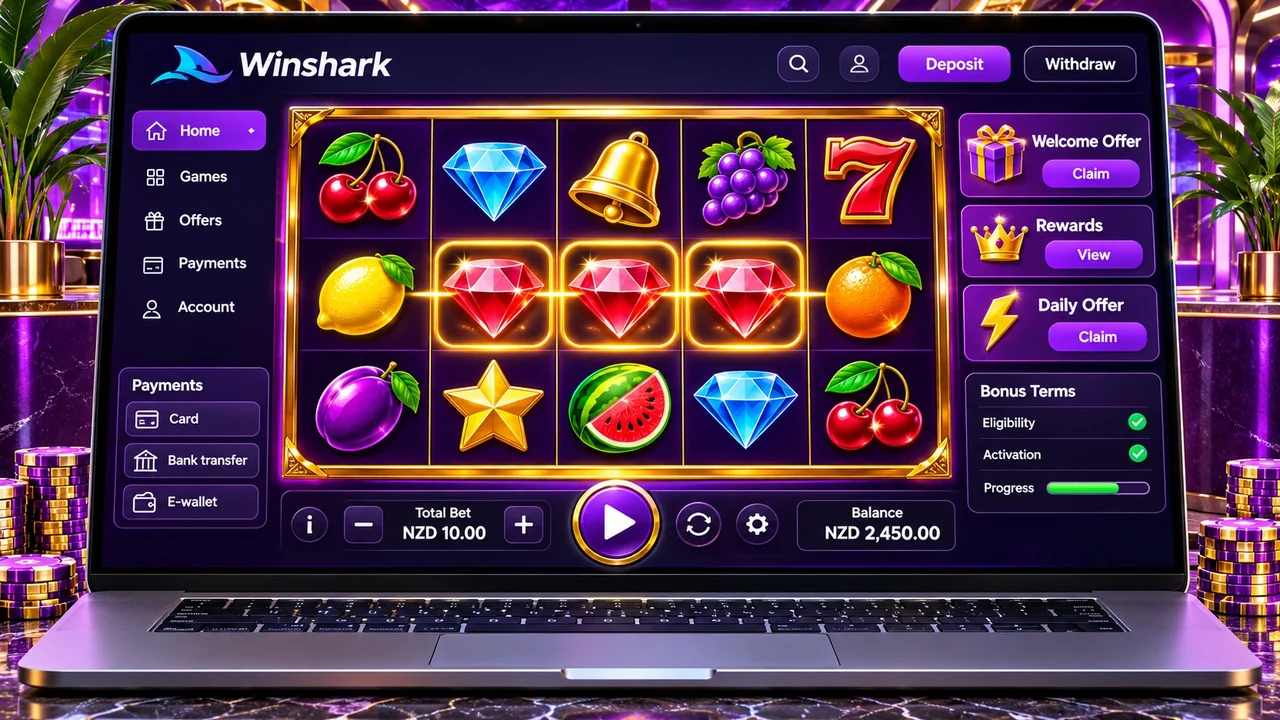
The grid on screen tells you how wins are counted. Five reels and three rows is the classic layout, but the counting method on top of that grid varies a lot between titles.
| Layout | How a win is formed | What to look for in the rules |
|---|---|---|
| Fixed paylines | Matching symbols from the left along set lines across the reels | The number of lines and whether they are all active at every bet |
| Ways to win | Matching symbols on adjacent reels from the left, in any row | The number of ways, often shown in the corner of the game |
| Changing reel heights | Each reel shows a different number of symbols on every spin, so the number of ways changes too | The maximum ways and how cascades interact with them |
| Cluster pays | Groups of touching symbols, up, down or sideways, on a larger grid | The minimum cluster size and what happens to winning symbols |
| Pay anywhere | A set number of matching symbols anywhere on the grid | The symbol counts needed for each payout tier |
Many modern titles add cascades, sometimes called tumbles: winning symbols disappear, new ones drop in, and a single paid spin can produce several wins in a row. When you read a paytable, check whether multipliers grow during a cascade and reset afterwards, because that changes how much the feature can pay. If the lobby tile and the help screen inside the game disagree, trust the help screen: it is the one tied to the version you are actually playing.
Reading the paytable before the first spin in NZD
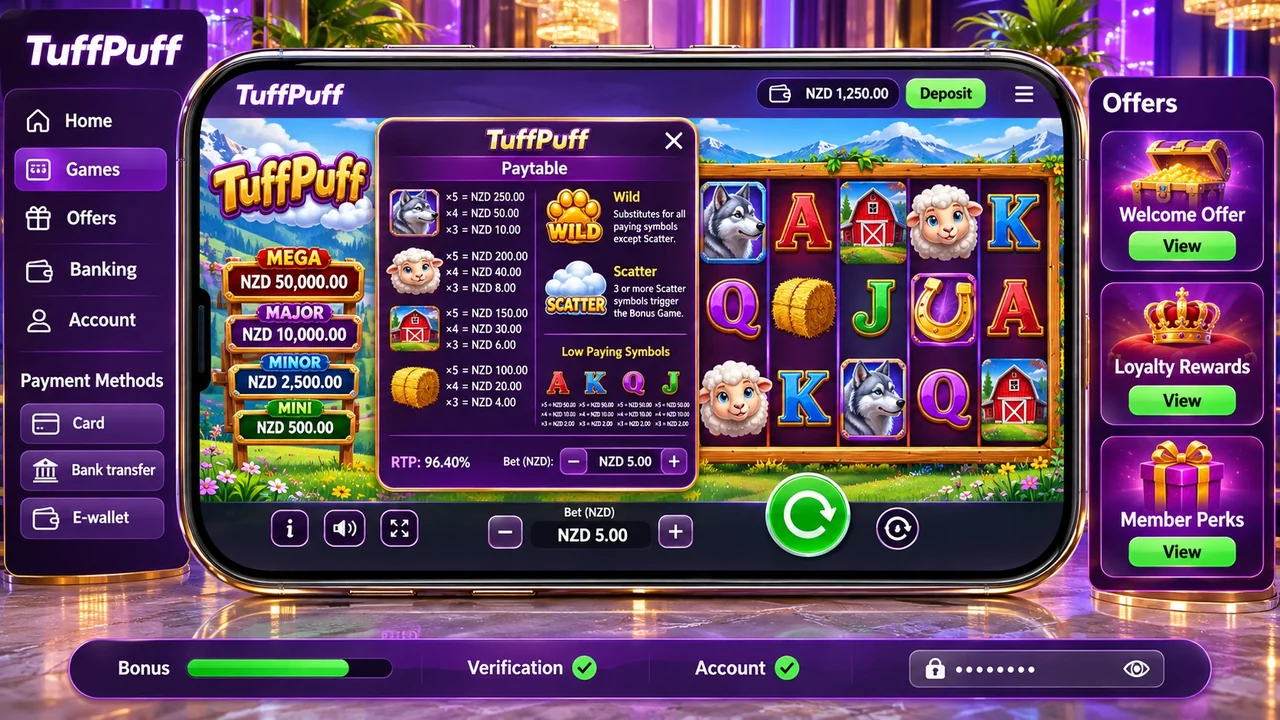
Every online slot has an information screen, usually behind an i or a menu icon. It is the most useful thing in the game and the one most people skip. Spend two minutes there and you know more than the lobby tile will ever tell you.
Symbol values
Payouts are listed either as amounts at your current stake or as multiples of the total bet. If the paytable shows amounts, change the bet and watch them update. If it shows multiples, a symbol paying 5x on a NZ$1 spin returns NZ$5, and on a 20c spin it returns NZ$1.
Bet settings
Some games use a single total bet. Others split it into coin value, coins per line and lines. Make sure the figure you are watching is the total cost per spin in NZD, not the coin value, or a session can cost several times more than you meant.
Special symbols
Wilds substitute for other symbols, scatters usually trigger features regardless of position, and some games add collector, coin or mystery symbols. The rules screen explains each one and often shows what triggers the bonus round.
The maximum win
Most modern pokies state a maximum win, expressed as a multiple of the stake. Once that cap is reached, the round ends. It is worth knowing, mainly so that you understand the game is designed with an upper limit.
RTP and volatility in one minute
Two numbers describe the maths of a slot. RTP, or return to player, is the share of all money staked that the game is designed to pay back over a very large number of spins. Volatility describes how those returns are spread: frequent small wins, or long quiet spells broken by bigger ones.
Example, for illustration only: a game with a published RTP of 96% is designed so that, across millions of spins, NZ$100 staked returns around NZ$96 on average. In one evening of a few hundred spins you might finish well up, or lose the lot. The percentage is a long-run property of the game, not a forecast for your session.
One detail that catches people out: some studios release the same game in several RTP versions, and the casino chooses which one to offer. The rules screen inside the game shows the figure that applies in that lobby, so check it there rather than trusting a number from a review. Our longer page on online pokies, RTP, volatility and bankroll basics goes into both measures in more depth.
Bonus features and what they cost
Features are where most of a modern slot’s top-end payouts sit, and they are what the game is really built around. Knowing the common types helps you pick a pokie that suits the way you like to play.
- Free spins. Triggered by scatters, usually with something extra: sticky wilds, growing multipliers or extra symbols added to the reels.
- Hold-and-spin or respin features. Special symbols lock in place and the remaining positions respin, often with a fixed set of respins that resets when a new symbol lands.
- Multipliers. Applied to a single win, a cascade sequence or a whole feature. They are the main reason high-volatility games can pay large sums from small stakes.
- Pick-and-win rounds. A choice screen where the outcome has already been decided; the picks only reveal it.
- Bonus buy. Some games let you pay a set multiple of your stake to go straight to the feature. It is the same maths compressed into fewer, more expensive spins, and not every market or casino allows it.
Features in games played with promotional spins sometimes behave differently, for example by being excluded from bonus wagering. If you are playing on a free spins offer, read our guide on free spins value, wagering and eligible games before you start.
Online pokie or pub pokie: what is actually different
Most Kiwis met pokies in a pub or club long before they tried one online. In New Zealand those venue machines are class 4 gambling under the Gambling Act 2003, run by societies that distribute part of the proceeds to community groups, and overseen by the Department of Internal Affairs. Online slots are a different product, even when the artwork looks similar.
| Point | Pub or club pokie | Online casino slot |
|---|---|---|
| Where the money goes | Venue, society and community grants under the class 4 system | The casino operator and the game studio |
| Game information | Paytable on the machine | Paytable, rules and usually the RTP inside the game |
| Choice of games | Whatever the venue has installed | Hundreds or thousands of titles in one lobby |
| Pace | Fixed by the machine | Set by the game and the market rules, often faster |
| Paying in | Cash or venue methods | Cards, bank transfer and other online methods in NZD |
| Tools to control play | Venue staff and signage | Deposit limits, reminders and time-outs in the account |
The online version gives you more information and more choice, which is useful, and also makes it easier to play for longer than planned. That is why the account tools covered later on this page are worth setting before the first deposit.
Picking an online casino slot that suits your session
There is no best pokie in general, only one that fits a particular budget and mood. A few questions narrow the lobby down quickly.
- How long do you want the session to last? A low-volatility game spreads a budget over more spins; a high-volatility one can end a session quickly or produce a rare big feature.
- What stake per spin can you afford for that length of time? Divide the session budget by the stake to see how many spins you are buying.
- Which feature style do you enjoy? Free spins with multipliers, hold-and-spin collections, cascades, or plain lines with no frills.
- Is the RTP shown in the game acceptable to you? Compare it inside the lobby you are actually using.
- Does the game work well on your phone? Many titles are built portrait-first now; some older ones are awkward on a small screen.
Example, for illustration only: with a NZ$50 budget at 50c a spin you are buying around 100 spins. At NZ$2 a spin you get about 25. Neither is better; they are different sessions, and knowing which one you have chosen helps you stop when the budget is spent.

Mistakes that make a pokie session cost more than planned
Most of the money people regret losing on slots goes in a handful of predictable ways. None of them is about bad luck; they are about how the session was set up.
- Watching the coin value instead of the total bet. On games with lines and coins, a small coin value can still mean a large total stake per spin.
- Raising the stake to win back a loss. The game has no memory, so a bigger bet only makes the next loss bigger.
- Leaving autoplay running unattended. Where autoplay is offered, set a loss stop and a number of spins, and stay with the screen.
- Assuming a feature is close. Near misses on the scatter reels are part of the display, not a sign that the bonus is about to land.
- Playing a bonus balance on a game that does not count. If you are clearing a promotion, check which slots contribute before you choose one.
- Forgetting the currency. A balance in a foreign currency makes stakes look smaller or larger than they are in NZ dollars.
A simple habit fixes most of these: decide the budget, the stake and a stopping point before the first spin, and write them down if that helps. If you are weighing a bonus to go with the session, our guide to comparing casino bonus conditions shows what to check beyond the headline.
Try it in demo mode first
Many casinos and studios let you play a slot with play credits before you stake real money. Demo mode runs the same game logic and the same rules screen, so it is the cheapest way to learn how a feature triggers, how the bet controls work and whether you like the pace.
What a demo cannot do is tell you how a real session will go. A few hundred demo spins are just as random as a few hundred paid ones, so a lucky demo is not a signal that the game is generous. Treat demo play as a tutorial, not a test of the odds.
Some casinos only show demos to logged-in, verified customers, and a few do not offer them at all. If you cannot find a demo, the studio’s own website often has one.
Funding a slot session in New Zealand dollars
Before you deposit, check that the account can be held in NZD. A balance in another currency means a conversion each time money goes in or out, and the margin is taken by your bank or the payment provider, not shown on the slot screen.
| Method | Typical use | What to check |
|---|---|---|
| Visa or Mastercard debit and credit cards | Instant deposits at most sites | Whether your bank allows gambling transactions and charges an offshore fee |
| Bank transfer, including POLi-style online banking payments where offered | Deposits from your NZ bank account; transfers are also a common payout route | Exact reference and name match |
| E-wallets | Deposits and withdrawals through a separate account | Wallet fees and whether a promotion excludes wallet deposits |
| Prepaid vouchers | Deposits only | You will need another method to withdraw |
The method you deposit with is usually the one the casino pays back to first, so pick one that can also receive a withdrawal. Our guides to casino payment methods in NZ, card casinos and authorisation checks and bank transfer casinos cover each route. The rules for online casinos serving New Zealand are also changing; our page on NZ online casinos after 1 December 2026 explains what that means for players.
Set the session up before the reels start
Slots are fast, and a fast game with a big lobby makes it easy to keep going. Most casino accounts offer simple tools that take a minute to set and do their job quietly in the background.
- A deposit limit per day, week or month, set at a level you would be comfortable losing.
- A session reminder that pops up after a set time, showing how long you have played and your net result.
- A loss limit, where offered, which stops play once a chosen amount has gone.
- A time-out of a day or longer if you want a break without closing the account.
These tools work best when chosen before you play, not in the middle of a losing run. If you want to compare how other games handle risk, our pages on online roulette formats and live casino tables use the same plain approach.
Gambling is for people aged 18 and over; play only with money you can afford to lose, and visit our responsible gambling page for support in New Zealand.
Online slot questions from NZ players
Are online casino slots rigged?
Games from established studios use a tested random number generator and published rules, and independent labs check that the results match the design. The house edge is built in openly through the RTP, so the game does not need to be rigged for the casino to earn over time.
Is a slot the same as a pokie?
Yes. Pokie is the everyday word in New Zealand and Australia, slot is the international one, and online casinos use both. The mechanics are the same.
Can I play online slots in NZ dollars?
Many casinos that accept New Zealand players offer NZD accounts. Choose the currency at registration, because it is often hard to change once you have deposited.
Do online slots pay better than pub pokies?
Online games usually show their RTP inside the rules screen, which makes them easier to compare. A higher published return still says nothing about one session, and the faster pace online can cost more over an hour.
Can I win real money playing a demo slot?
No. Demo credits have no cash value and cannot be withdrawn. Demo mode is for learning the game, not for building a balance.